FREE Magnesium Body Rub Deluxe Mini with your first order*
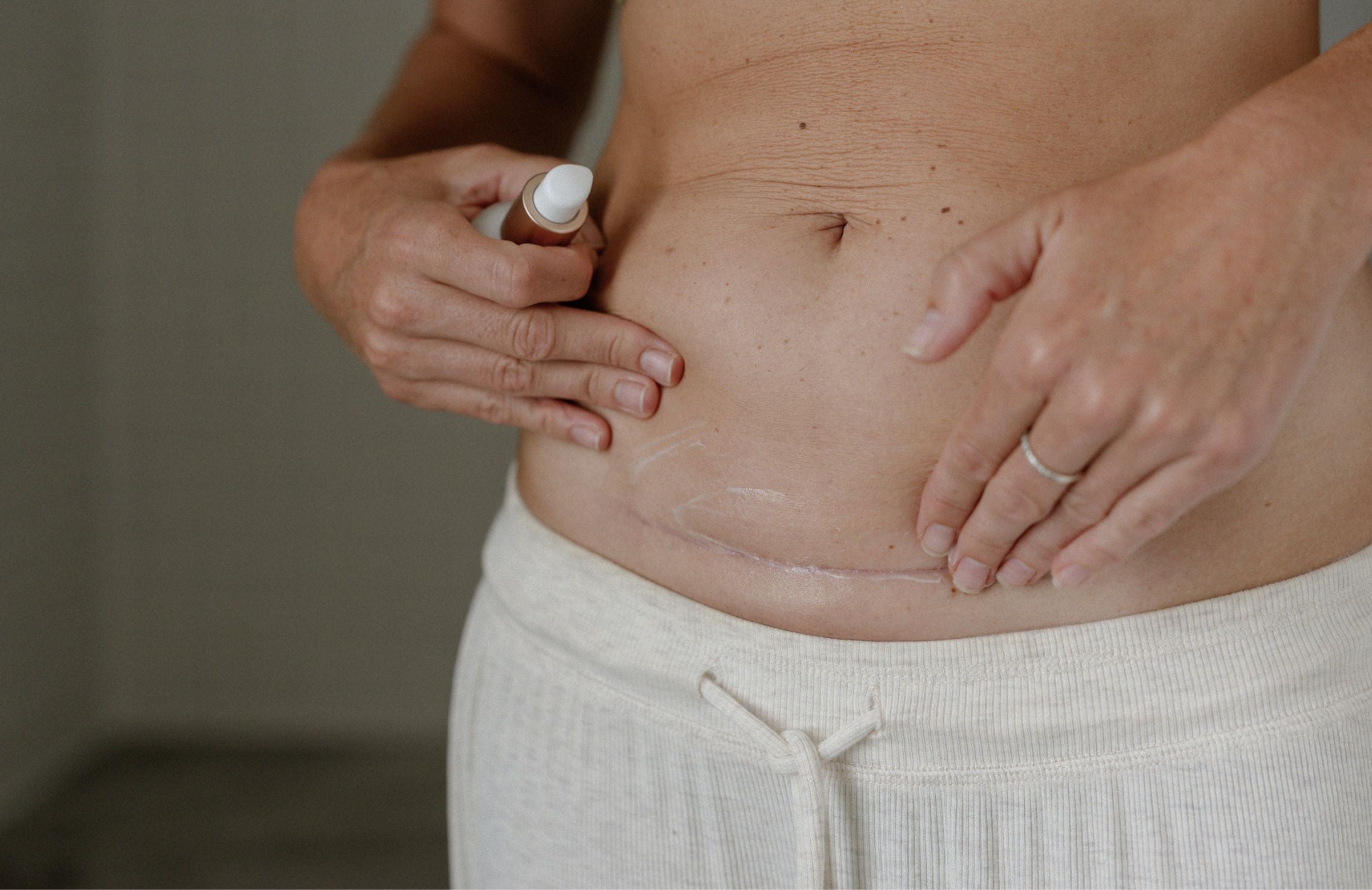
Getting to know your scar.

Your body is doing the most important work right now.
In these early weeks, your only priority is allowing the incision to close fully and safely. Beneath the surface, your body is working to seal tissue layers, reduce inflammation, and protect against infection. Rest is not indulgent here. It is essential.
Keep the area clean and dry, follow your healthcare provider’s instructions carefully, and avoid applying any topical scar treatments until the skin is completely closed and your provider has confirmed it is safe to do so.
This stage is about protection. Your body knows what to do.

Once the incision is fully closed and your dressings have been removed, and there are no signs of infection, you can begin using a second skin to protect and hydrate your scar.
This consistent moisture balance can help minimise excess scar tissue formation while supporting a smoother, softer and flatter-looking scar.
During these early weeks, your scar may feel tight, sensitive, itchy, or appear raised and red, all of which are common parts of the recovery process.
Consistent use of silicone scar therapy during this stage can play an important role in supporting the your scar as it matures.

At this point, your scar is entering the remodelling phase. Collagen is reorganising. Texture and colour may still shift and change.
This is where targeted topical support becomes particularly valuable. You'll want to support skin renewal, barrier function, and visible refinement of texture and tone.
Scars at this stage often soften, flatten, and become less red over time with consistent care. Recovery is still happening, even if it feels slower.

Scar maturation can continue for up to 2 years.
Protection remains key. Avoid direct sun exposure where possible, as UV can deepen pigmentation. Be cautious with aggressive massage techniques, and avoid layering multiple new products too quickly. Overstimulating the area can create unnecessary stress on tissue that is still refining itself.
There is no “perfect” scar. There is only your body’s story of strength, protection, and life. And that deserves care.
Different roles. One beautiful result.
Introducing a thoughtfully developed and easy-to-follow scar care system.
Scar healing happens in phases and the right support at each stage makes all the difference. Our simple scar care system pairs silicone strips for early-stage recovery with a scar serum for longer-term visible refinement.

Week 4–6 post surgery/injury.

Silicone Scar Strips
Once your scar has fully closed, silicone strips are considered the gold standard for early care. Silicone strips create a protective barrier that helps maintain hydration and supports the skin’s natural scar management process, promoting a softer, flatter, and less noticeable appearance.
+ Helps soften and flatten scars
+ Supports balanced collagen formation
+ Maintains optimal hydration
+ Helps reduce surface tension across the scar
You can reuse your silicone strips for up to 4 weeks if cared for correctly.
Week 6–12 post surgery/injury.

Silicone Scar Strips + Complex Scar Serum
As your skin moves into the refining phase, introduce both Complex Scar Serum and Silicone Scar Strips as a two-step scar care routine.
Daytime: Silicone Strips for everyday protection.
Evening: Serum for long-term refinement.
Do not use products together, serum can interfere with silicone strip adhesion.
Up to 2 years post surgery/injury.

Complex Scar Serum
A complex blend of 12 bioactives to target skin texture, tone and hydration reduce the appearance of scars. Recommended for longer term scar refinement.
+ Promotes visible scar refinement
+ Reduces scar redness
+ Improves skin hydration
+ Supports healthy collagen formation
+ Softens and smooths scars
+ Can be used for scar massage
+ Clinically tested and gentle on skin
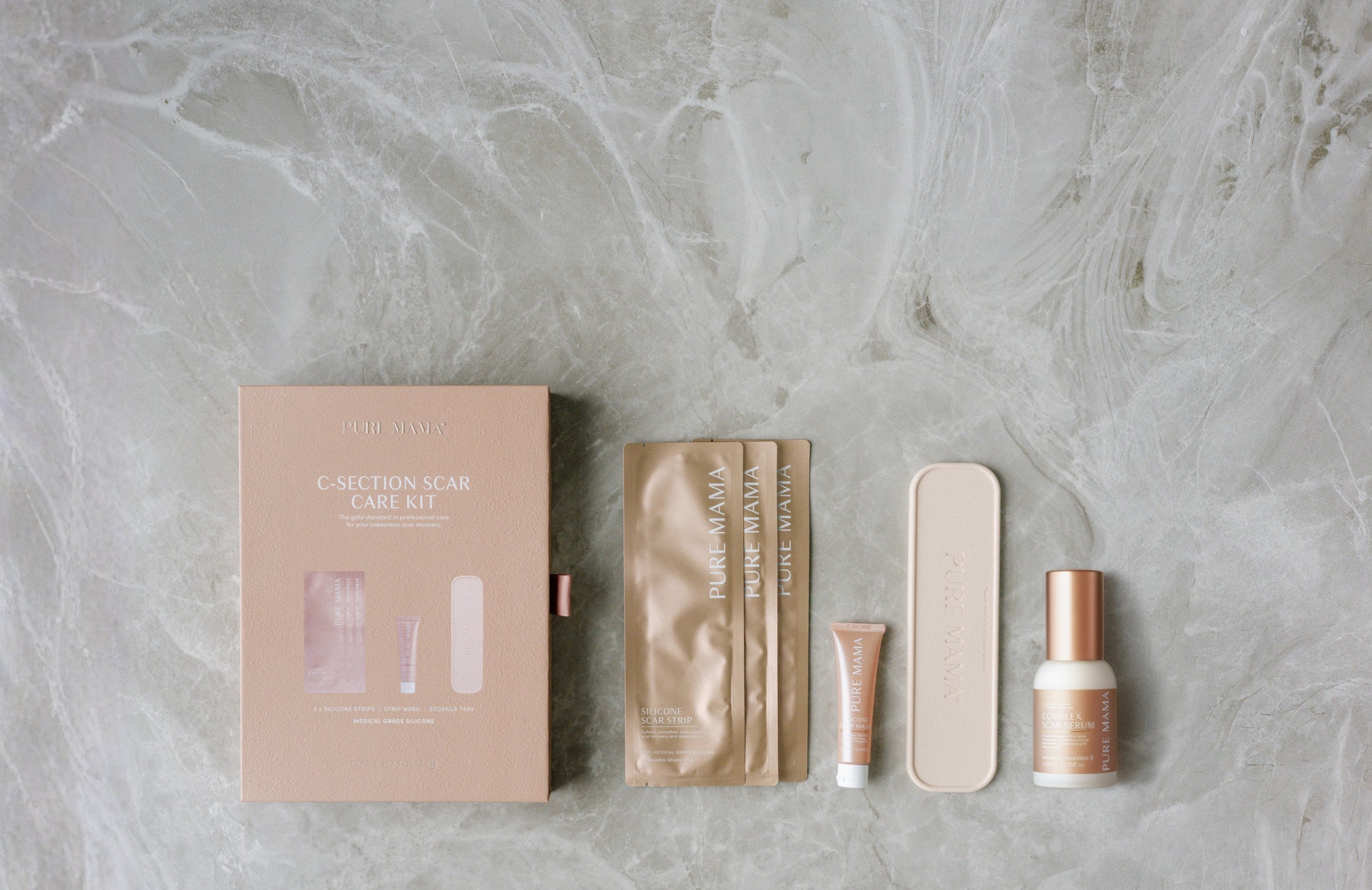
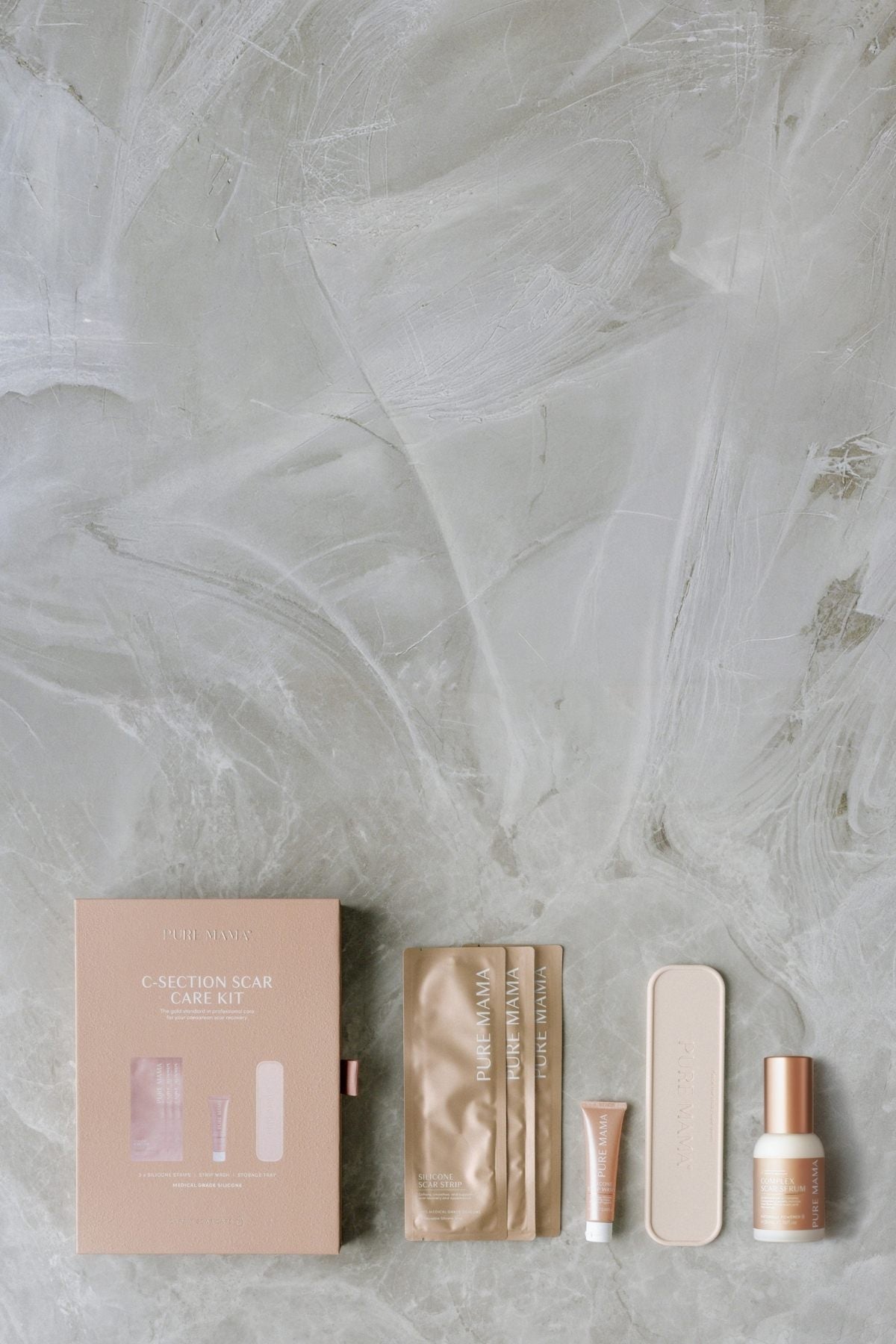
Your 4 step guide.
Once your scar is fully healed and closed (typically around 6 weeks postpartum), gentle scar massage can help improve flexibility, soften scar tissue and reduce feelings of tightness.
Directions for use
- Apply a small amount of scar serum to clean, dry skin.
- Using one or two fingertips, gently massage along the scar using small circular, zig zag, side to side as well as up and down motions.
- Slowly work across the entire length of the scar for 2–5 minutes.
- Use light pressure only — the massage should never feel painful.
For best results
Massage your scar once or twice daily as part of your scar care routine.
For a comprehensive approach to scar care, wear Silicone Scar Strips during the day and perform your scar massage with Complex Scar Serum in the evening.
